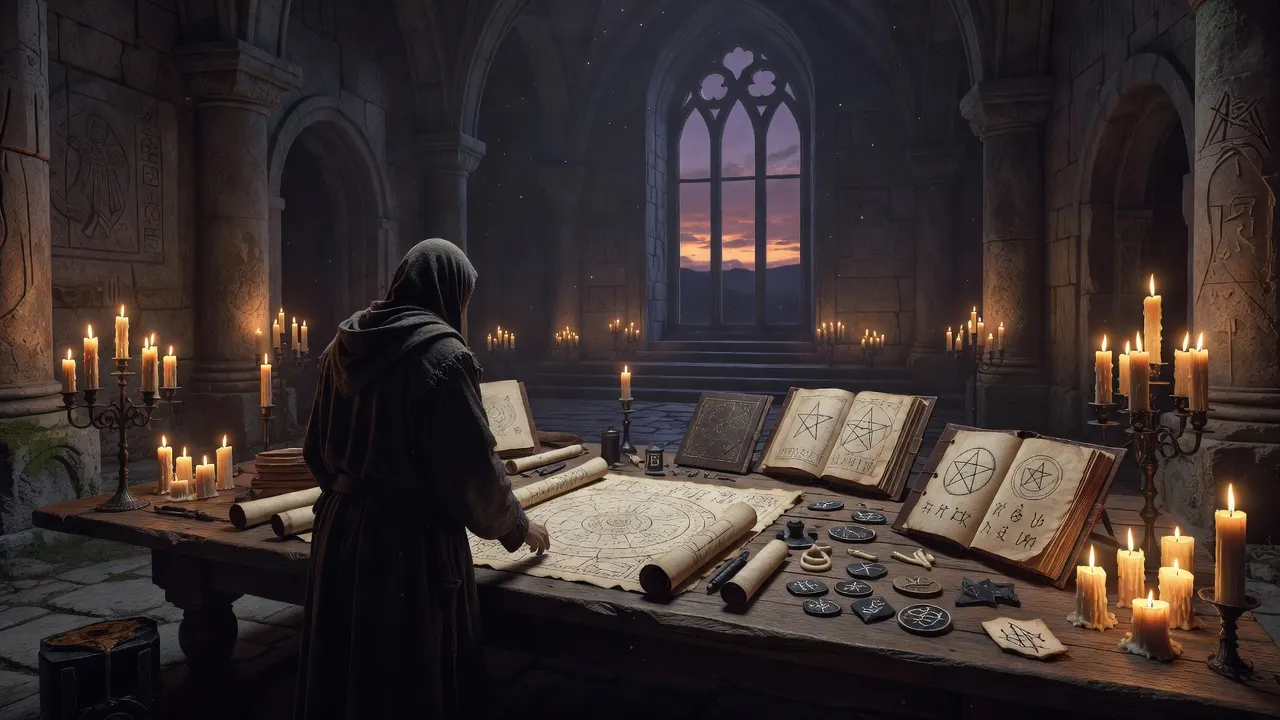
Build the religion from believers’ daily practices, then connect those practices to beliefs, myths, authority and the needs of your setting. Decide what the faith helps people understand or do, and show its effects in ordinary life. Add tensions such as competing interpretations only where they matter to your story or campaign.
Key facts
- Religion can help people interpret reality and define human beings, though this is one modern academic theory rather than a universal definition. Religion
- A ritual can be a prescribed outward form of religious observance. Ritual
- Some faiths use a hierarchy of priests, while others consider every member a priest or priestess. Priest
- Creation myths can describe humanity emerging from another world into the one it inhabits. Creation myth
- A fictional religion works best when it fits its world and has a purpose in the story. Design a religion for a fantasy world
Start with what believers do every day
Begin with a small, observable practice rather than a list of gods; ask what a believer might do at home, at work or when meeting a neighbour. A religion can include prescribed forms of observance, but its relationship between doctrine and ritual can vary widely. Ritual
Give the practice a reason within the faith; it might express gratitude, mark a duty or help people make sense of uncertainty. Treat those as design choices, not claims about all religions; the broader idea that religion can help interpret reality offers a useful starting point. Religion
Next, decide what the practice changes in ordinary life; Does it shape how believers greet one another, share food, settle disputes or prepare for a journey? Choose consequences that suit your setting. Writers are advised to make religion matter to the world and story rather than leave it as a backdrop. Create a fictional religion for world building
Keep the first design modest; One custom with a clear meaning is more useful than many details that never affect a character. A setting’s religion can be developed at whatever level of detail the creator needs. Fantasy religion design guide
Then test the custom against your world. If the climate, work or social structure makes the practice difficult, decide whether believers adapt it or preserve it as a demanding tradition. A faith’s practices and beliefs should fit together with the world around them. Design a religion for a fantasy world
Use myths to explain what believers cannot settle
Once daily practice feels grounded, create stories that help believers understand their world. A creation myth can explain how people came to inhabit their world, and emergence myths describe humanity arriving from another world. Creation myth
Do not make every myth a clean answer. Let the story leave room for doubt, competing readings or practical disagreement. You decide which details believers treat as literal, symbolic or unresolved. This is a design choice, not a claim that every religion handles myth in the same way.
Connect the myth to something your characters face. If the story explains a duty, a boundary or a source of fear, it can influence choices rather than sit apart as background. Creation lore, moral principles, justice and conduct are all possible elements of a fictional faith. Design a religion for a fantasy world
Build conflict from consequences, not from a made-up villainous creed. Believers might disagree over how a teaching applies to a new problem, or whether a familiar custom still serves its purpose. Religion can add complexity and conflict to a story by influencing characters’ motivations. Create a religion for a fantasy world
Decide how much of this material your story needs. A myth can remain a short reference if it never affects events; develop its interpretations when characters must act on them. The religion’s detail should match its role in the campaign or story. Fantasy religion design guide
Make religious authority visible through duties and disagreement
Decide whether believers rely on religious specialists or handle worship without an intermediary. Some traditions regard every member as a priest or priestess, while other traditions have priestly hierarchies. Priest
If your religion has clergy, give them concrete responsibilities. Duties can include mediating relationships between worshippers and deities, and administering rituals. Priest
Work out how those duties affect power. Who can lead a ceremony, interpret a teaching or decide that a custom has been broken? These are questions for your setting, not universal rules. Make the answers visible through the choices characters can and cannot make.
Money also needs a place in the design if it matters to your story. Decide who provides resources for religious work, what those resources support and whether the arrangement creates pressure. Keep the mechanism specific to your world; do not assume every faith collects money in the same way.
What this means for you?
Designing from practice outward gives you material that can appear in scenes. A character can keep a custom, avoid a taboo or decide whether to attend a gathering. You do not need to explain an entire theology before readers or players can see what the faith means to its followers.
If you are a game master preparing a settlement, start by choosing one public religious practice. Decide who participates, what they do and what changes if someone refuses. Then add a belief that gives the practice meaning. This creates a usable detail for play without requiring a full account of every doctrine.
For a writer, the same approach can reveal character through action. A person might follow a custom from habit, conviction or family pressure. Let the scene show the reason where it matters. You can develop deeper beliefs later if they shape a choice or conflict.
Use a taboo to show a boundary and a festival to show what a community values. These are creative prompts, not claims about how real religions must work. Keep each detail connected to the people who practise it, and consider how different believers might understand the same custom.
When you add clergy, focus on their work and influence. Decide who seeks their help, what they can authorise and what they cannot control. If the religion has no separate clergy, make clear how believers organise observance instead. Either choice can serve the setting; the important thing is that it follows from your design.
What to do now?
- Choose one daily ritual. Write what a believer does, when they do it and what meaning they attach to it. Make it easy to show in a scene.
- Set one taboo. Decide what believers avoid, what the taboo protects and what happens when someone breaks it. Keep the consequence proportionate to the role it plays.
- Plan one festival. Give it a purpose, a typical activity and a reason people might disagree about how to observe it. Use it to reveal the community’s priorities.
- Decide who pays the priests. If the faith has clergy, identify the source of their support and what it enables them to do. If it has no separate clergy, decide how believers organise shared observances.
- Invent one heresy. Choose a belief or practice that challenges an established interpretation. Give its supporters a reason that makes sense to them, then decide what the disagreement costs your characters.
Sources
- en.wikipedia.org/wiki/Religion
- en.wikipedia.org/wiki/Ritual
- en.wikipedia.org/wiki/Priest
- en.wikipedia.org/wiki/Creation_myth
- zainahyousef.com/design-a-religion-for-a-fantasy-world
- zainahyousef.com/how-to-create-a-fictional-religion-for-world-building
- inkwellideas.com/worldbuilding/worldbuilding-religion-design
- www.quillandsteel.com/blogs/writing-tips/how-to-create-a-religion-for-a-fantasy-world
About this page
Written with AI assistance from the sources listed above, then checked by automated fact, source, repetition and quality checks before publishing.
Facts and links checked on 31 October 2026. Summarises the sources linked above; check the linked source for the latest version.
How we researched this: we compiled this guide from the official and independent sources listed above, and checked the facts on the date shown. Our editorial policy explains how we choose and check sources.