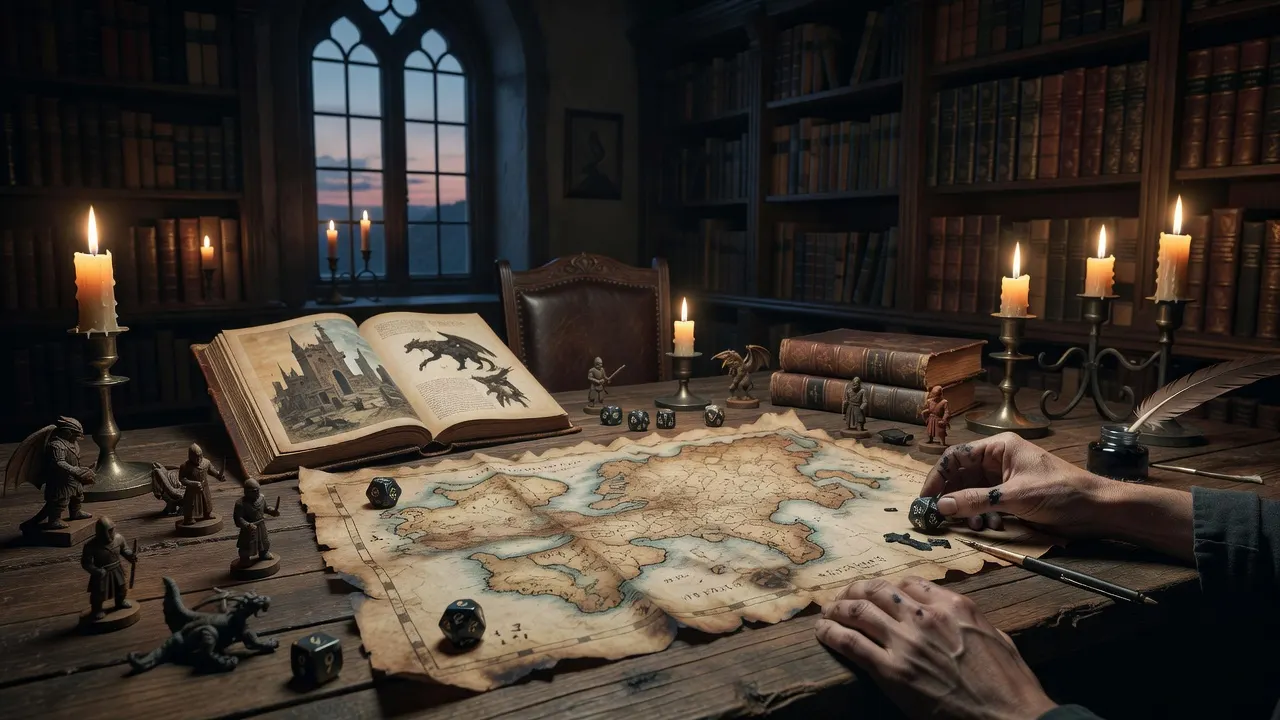
Turn history into clues the characters can find, rather than speeches they must sit through. Choose past events that matter to present choices, then express each as a short detail carried by a place, object or person. Let clues appear during play, invite interpretation, and track what the group has established.
Key facts
- Foreshadowing uses story events to build emotional investment and help later developments feel credible.
- Mystery fiction gives readers clues and an opportunity to solve the puzzle before its solution is revealed.
- Context clues help readers guess the meaning of an unknown word or phrase.
- Secrets and clues can invite players to explore through their characters.
- Campaign lore records can distinguish established, uncertain and rejected facts.
Choose history that can change play
Start with a past event that can affect a present decision. A forgotten treaty matters when characters must decide whom to trust; an old disaster matters when its traces change how they travel. If history cannot alter a choice, give it less space at the table.
Write the event as a private, plain statement. Then ask what the characters could notice, what they might misunderstand, and what action the knowledge could support. This turns background into usable material rather than a speech about dates and rulers.
Keep each clue small enough to deliver in a scene. One compact detail can invite a question without stopping play to explain the answer. A source on lore recommends breaking lore into short statements that can be placed where needed, then revealing world details as characters explore.
Connect the detail to something the characters already care about. Secrets and clues can draw on character aspects and invite exploration, giving each player a personal reason to investigate. That connection need not make the history personal by birth or destiny; a practical goal, fear or promise can be enough.
Finally, decide how much uncertainty the event should retain. Some histories should resolve a question; others should complicate it. Keep the distinction clear in your notes, so an open rumour does not quietly become settled truth.
Make clues point towards one answer without explaining it
Give an important historical claim more than one route into play. A character might hear a local account, inspect a damaged object, or notice a custom that makes little sense without the past. These are alternative carriers for the same idea, not repeated explanations in a row.
Make the clues support one another. A mark on an object can suggest what happened; a local account can identify who was involved; a place can show what remains. The players should be able to compare evidence and form a view, rather than needing one perfect clue from the game master.
Mystery fiction often presents a puzzle and clues before its dramatic solution, giving readers a chance to solve it first. Borrow that fairness for lore: show evidence before confirming what it means, and let player theories affect which lead they follow.
Clues need not be written explanations. Context can help someone infer the meaning of an unfamiliar phrase, while game clues may be straight, cryptic, riddling or contradictory. Use difficulty to create a choice or discussion, not to hide information behind an unguessable code.
Track what the group knows
Keep a record that separates what is established from what remains uncertain or has been ruled out. A campaign lore-tracking guide describes those three categories as established canon, uncertain canon and rejected canon. This prevents a rumour heard by one character from becoming shared knowledge by accident.
For each clue, note its intended meaning, its source in the fiction, and what the players actually learned. Record whether they found it, missed it, or drew a different conclusion. That record helps you respond to their interpretation without forcing them back onto a prepared explanation.
Review the notes before the next session. If the group has already solved the question, let the discovery shape events rather than repeating clues. If they have not seen a clue, decide whether it still fits naturally into play. A guide to seeding secrets says the right frequency depends on the adventure and the kind of game being run.
Also note which characters received a clue. A personal invitation to explore can make a secret relevant to one character, but the rest of the group may need a route into the same investigation. Record their access, not just the clue’s existence.
What this means for you?
You do not need to teach the whole past before the adventure can begin. Choose one piece of history that bears on a live problem, then prepare several ways for the group to encounter it. The practical test is simple: can this information help the characters decide, investigate or understand a consequence?
If you are a game master preparing a village mystery, begin with a past event that explains a current tension. Write one sentence for the truth, then sketch a rumour, a physical trace and a local habit that point towards it. The rumour may be incomplete; the trace may need interpretation; the habit may raise a question. Keep the answer out of the first delivery.
When players engage, treat their ideas as part of the reveal. Ask what they think the evidence suggests, and let that answer guide what they examine next. If they miss a clue, do not assume they ignored the story: perhaps its meaning was not visible in the scene. Offer another route when it fits, rather than repeating the same information unchanged.
Small clues also protect the pace of a session. A detail can enter through conversation or exploration, then wait until the players choose to follow it. Guidance on world lore argues for continuing to reveal details as characters explore, rather than relying on an encyclopaedic account.
As the campaign grows, record what the group accepts and what remains open. Structured lore tracking can distinguish confirmed facts from uncertain reports and rejected claims. This lets future scenes build on what players learned without treating every rumour as truth.
The result is history with a job at the table. It can prompt a choice, reward attention or give a place new meaning. Leave some past events out; the aim is not to display every piece of lore, but to make relevant history discoverable through play.
What to do now?
- Choose one past event that can affect a current choice. Write its truth in one clear sentence, then identify what the characters could do differently if they learn it.
- Draft three distinct clue carriers: a person, an object and a place. Make each point towards the same history, but give each a different detail to notice or question.
- Place each carrier where it can appear during an action the players might choose. Do not make progress depend on one exact conversation or route.
- Track the lore fact, its three carriers, where each was placed, and a found yes/no mark for each. Add a short note on what the players concluded.
- Review the record after play. Mark what is established, uncertain or rejected, then choose the next clue only if it adds a useful lead.
Sources
- en.wikipedia.org/wiki/Foreshadowing
- en.wikipedia.org/wiki/Mystery_fiction
- en.wikipedia.org/wiki/Clue_(information)
- phd20.com/blog/seeding-secrets-and-clues
- tabletoparc.com/resources/ttrpg-lore-tracking
- slyflourish.com/bathe_your_world_in_lore.html
About this page
Written with AI assistance from the sources listed above, then checked by automated fact, source, repetition and quality checks before publishing.
Facts and links checked on 31 October 2026. Summarises the sources linked above; check the linked source for the latest version.
How we researched this: we compiled this guide from the official and independent sources listed above, and checked the facts on the date shown. Our editorial policy explains how we choose and check sources.