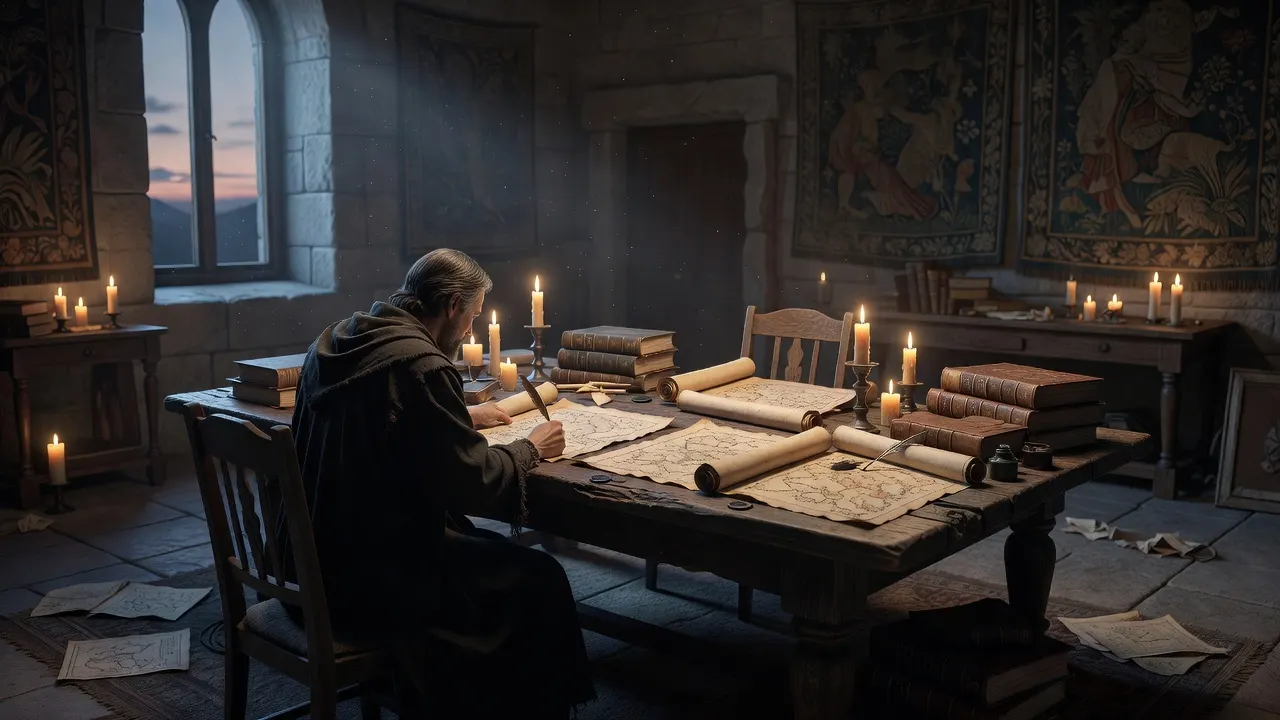
Build campaign history around causes and consequences that explain the present, then record the rules and details in a shared reference. Keep only lore that supports character motives, current conflicts or future play. Check new material against established facts, and reveal the past through play rather than long explanations.
Key facts
- Lore can explain characters’ actions and the world’s present state, rather than serving only as an encyclopedia of facts.
- World history can include minor events, conflicts, fallen empires and ancient myths that add context to the present.
- Clear rules and guidelines support consistency across a fictional world.
- History can be introduced through dialogue or artefacts, building intrigue without a direct exposition dump.
Build the past to explain the present
Begin with the conditions that matter in play: who holds influence, what people fear, and what choices remain difficult. Work backwards only where a cause would make those conditions more credible; History gains value when it explains the current world and gives characters reasons to act.
Give important events consequences that survive beyond their original moment. A conflict might change who trusts whom; a lost settlement might shape how travellers use a road; these are design prompts, not claims about a fixed formula. The useful test is whether a past event changes a present choice, belief or obstacle.
Not every part of the past needs equal detail. A campaign’s history can focus on the places and events that support its adventures, rather than trying to document everything. One guide notes that a campaign-focused game master might need only a limited span of regional history. Treat that as an example of limited scope, not a required duration.
Link causes and effects clearly. When a new rule or historical claim would clash with what players already know, decide which version is true before it enters play. Coherence depends on explanations that fit known causes and effects. This makes the past a working part of the campaign, not a catalogue detached from it.
Keep lore consistent and usable
Record decisions in one reference that the game master can consult and update. Include settled rules, historical claims, important relationships and open questions. A world bible is a useful tool for tracking details across a project. Keep entries brief enough to check during preparation.
Separate confirmed facts from possibilities. Mark an idea as unresolved until play or preparation establishes it. This prevents a tentative note from becoming an accidental rule. When a new detail conflicts with an established one, review the conflict instead of quietly adding both versions. Guidance on consistency recommends cutting contradictory information and streamlining lore.
Make rules legible to the people who use them. Write down what a rule permits, what it prevents, and what happens when someone tests its limits. Keep the wording practical; a rule should help settle decisions at the table, not create more uncertainty. Clear guidelines help maintain coherence within a world.
Review the reference whenever the campaign changes direction. If a revision affects motives, customs or historical causes, adjust the connected entries too. Significant inconsistencies or changes in direction call for a revised worldbuilding process. A regular check helps keep later material aligned with what the group has already encountered.
Reveal history through play
Introduce a piece of history when it matters to a choice, obstacle or discovery. A character might hear a local account, examine an old object or encounter a custom whose origin is unclear. History can be referenced subtly through dialogue or artefacts. Let each clue answer something while opening a useful next question.
Avoid explaining every background detail before players have a reason to care. Lore delivered through action and dialogue can keep the story moving, while information dumps can interrupt its flow. For a session, choose one relevant detail and let the group decide whether to investigate further.
Use disagreements about the past as playable material. A community might preserve competing accounts, or a group might challenge a practice that others defend. Splinter cults, reform movements, forbidden practices and suppressed truths can supply campaign material. Give each account a reason to exist, and avoid making every mystery a hidden fact waiting to be revealed.
Invite feedback on whether the world makes sense to someone encountering it through play. Ask where a cause feels missing, which detail is hard to remember, or what seems to contradict an earlier scene. Sharing a world with others and seeking feedback can help assess coherence and believability. Use the answers to revise the reference, not to add lore automatically.
What this means for you?
Consistent campaign lore is less about writing a complete past than making the material you use fit together. Start with what the players can encounter: a rule, a local belief, a lingering dispute or an object with a story. Ask what caused it and what it changes now. If the answer affects no decision or expectation, it may not need a place in your notes.
If you are a game master preparing a settlement where two groups distrust one another, choose a past cause that can be shown through present behaviour. Decide what each group believes, what evidence players can find, and what would change their minds. Keep the established claims in your reference, but leave room for characters to discover whether those claims are complete. The scenario stays coherent because clues grow from the same underlying history.
Use a compact record to protect continuity without making preparation feel like paperwork. Note the settled fact, its cause, its visible consequence and any unanswered question. When play creates a new detail, check whether it fits the existing explanation. If it does not, either revise the older note openly or treat the new idea as unconfirmed. This makes changes deliberate rather than accidental.
Finally, treat exposition as a choice about timing. Give players enough context to make a meaningful decision, then let interest guide what they learn next. An artefact or exchange can carry a fragment of history without requiring a lecture. The campaign’s past becomes memorable when it helps players interpret what is happening, rather than asking them to memorise details without purpose.
What to do now?
- Choose the current pressures that matter to play. Write down the present conflict, a few affected groups and the choices players may face. Use these as filters for historical detail.
- Trace a cause for each important condition. Add only the past events needed to explain it, and note the consequence that remains visible now.
- Record confirmed facts, active rules and unresolved ideas in a shared reference. Label uncertainty clearly so possibilities do not become accidental canon.
- Check each new detail against existing causes, effects and rules. When two entries conflict, choose which one stands and update the reference rather than preserving both silently.
- Reveal relevant history through scenes, objects, customs or conversation. Offer enough information for a decision, then let players pursue more if they choose.
- Review after play. Ask what felt unclear or inconsistent, make targeted edits, and remove background material that does not help explain the present or support future play.
Sources
- www.flyriver.com/g/establishing-consistent-rules-and-lore
- behindthedraft.com/keeping-worldbuilding-consistent
- dyerbolical.com/how-to-build-a-fictional-universe-across-multiple-books
- www.anima-roleplay.com/resources/worldbuilding/lore-history-building
- www.flyriver.com/g/coherent-world-building
About this page
Written with AI assistance from the sources listed above, then checked by automated fact, source, repetition and quality checks before publishing.
Facts and links checked on 1 November 2026. Summarises the sources linked above; check the linked source for the latest version.
How we researched this: we compiled this guide from the official and independent sources listed above, and checked the facts on the date shown. Our editorial policy explains how we choose and check sources.