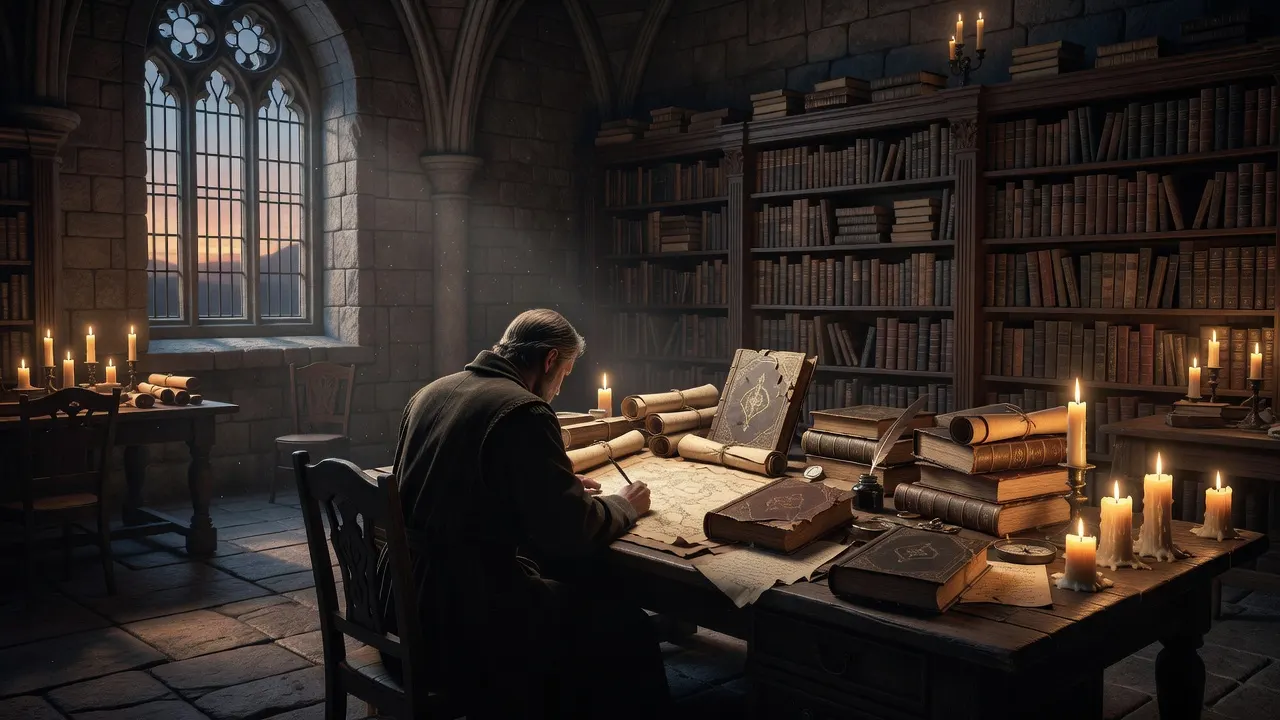
Write lore to serve the story, not to display everything you have invented. Give each piece a purpose, then connect it to a character, choice or conflict. Share the past through concise stories, dialogue and details the audience can encounter. Keep the world coherent, and let readers discover its depth through what matters now.
Key facts
- Defining lore’s purpose can help create a cohesive narrative that draws readers in. Behind The Draft
- A piece of lore does not need to be long or detailed. The Write Practice
- Character reactions, environmental details and dramatic situations can communicate lore without exposition paragraphs. Anima
- Magic needs rules, and consistency supports a believable fantasy world. Book Career In A Year
Give every piece of lore a story purpose
Begin by asking what a detail does for the story; it might shape a character’s decision, create a problem, or change how a reader understands a place. If it does none of these things, consider leaving it in your notes rather than placing it in the narrative. Defining lore’s purpose can help create a cohesive story.
Think of lore as material characters might tell one another, rather than a record that must be presented in full. A brief account can suggest a larger past without explaining every part of it; Lore may be a story that characters tell, and it need not be long or detailed.
Decide what the audience needs to understand at the moment a piece of lore appears. A custom may matter when a character breaks it; a remembered event may matter when people disagree about its meaning. Match the detail to the scene’s purpose, then let unanswered questions remain where they create interest. A writer’s audience and its concerns affect how readers interact with lore.
Keep the present story in view as you build the past. Rich world detail can compete with plot when it takes over the reader’s attention. Balance the two by keeping background information tied to what characters are doing now.
Reveal history through people and places
Dialogue gives characters room to disagree about what the past means. One speaker may defend a tradition, while another questions the account behind it. This lets the audience meet the lore as part of a live exchange instead of receiving a neutral explanation. Dialogue can deliver lore through characters arguing about an interpretation of history.
Choose sensory details that help a place feel present to the reader. A description should do more than decorate the setting: it can also suggest how people live there or what they value. Vivid sensory description can make a fantasy world feel real.
Use a world-building document to keep your private notes in order, but treat it as a tool rather than a script to recite. Your notes can hold the larger context; the narrative only needs the detail that makes a moment clearer or more charged. A world-building document can outline aspects of the world.
Make world rules support conflict
Rules make a setting’s unusual features easier to follow. If magic can solve any problem without limits, a reader may struggle to see why characters face difficulty. Decide what magic can do, what it cannot do and what it costs in your story. Magic needs rules.
Apply those rules consistently when characters use magic or meet its effects. Consistency helps a fantasy world remain believable, while exceptions should feel deliberate rather than accidental. Consistency is important to a believable fantasy world.
Give characters complexity beyond familiar roles. A hero, mentor or villain can begin with a recognisable function, but their choices and motives can complicate it. Common fantasy archetypes benefit from more complex characterisation.
Connect a character’s past to their present behaviour. A remembered custom, inherited belief or personal account can influence what they fear, trust or refuse to do. A well-crafted world can be supported by detailed character backstories.
Keep the audience’s experience in mind as you choose what to reveal. Lore is not only explanation; it can help readers become invested in a story when it draws them into the world. A well-crafted lore can transport readers to new realms and make them invested in the story.
What this means for you?
Lore works best as a working part of the story, not a separate history lesson. You can invent freely in your notes, then select only the details that give a scene meaning. This keeps the imagined world available to you without asking the audience to absorb every piece at once. Dumping lore can make an audience stop caring.
If you are a game master preparing a new settlement, write down its customs and past for your own use. Then choose one detail the players can encounter through a character’s reaction, a disagreement or something in the surroundings. Let their questions and decisions determine whether more context becomes useful. Lore can be communicated through character reactions, environmental details and dramatic situations.
For a novelist, the equivalent is to make history affect a present choice. A character might face a tradition they accept, resist or misunderstand. The detail earns its place because it changes the scene, not simply because it enriches the setting in the author’s mind. Lore can be tied to characters’ backstories to bring them to life.
For either form, keep a clear distinction between what you know and what the audience needs now. An outline can preserve the wider design, while scenes reveal the parts that matter. A story’s world can be detailed, but effective communication matters to whether that world reaches its audience.
What to do now?
- Choose the purpose. Write one plain sentence explaining what your lore should do for the story. Use it to judge whether each detail belongs in the narrative. Defining a purpose can help create a cohesive and engaging narrative.
- Draft a compact account. Write a short piece of lore in the voice of someone who lives in the world. Leave room for the speaker’s viewpoint instead of trying to explain everything. A short lore piece can be set in a world of your creation, and lore can be a story characters tell.
- Place it in a scene. Deliver the account through dialogue, a character’s reaction or a dramatic moment. Choose the method that makes the information matter to the scene. Dialogue and dramatic situations can carry lore.
- Check its effect. Ask whether the detail changes what a character does or what the audience understands. If it only adds background, move it to your notes. Lore can overwhelm plot when the balance between them is lost.
- Test the rules. Review any magic or world rule used in the scene. Make sure its limits fit the rest of your setting. Magic needs rules, and consistency supports believability.
Sources
- behindthedraft.com/lore-writing-tips
- thewritepractice.com/how-to-write-lore
- www.anima-roleplay.com/resources/worldbuilding/writing-storytelling
- www.bookcareerinayear.com/crafting-your-own-magical-world-10-tips-for-writing-fantasy
About this page
Written with AI assistance from the sources listed above, then checked by automated fact, source, repetition and quality checks before publishing.
Facts and links checked on 1 November 2026. Summarises the sources linked above; check the linked source for the latest version.
How we researched this: we compiled this guide from the official and independent sources listed above, and checked the facts on the date shown. Our editorial policy explains how we choose and check sources.