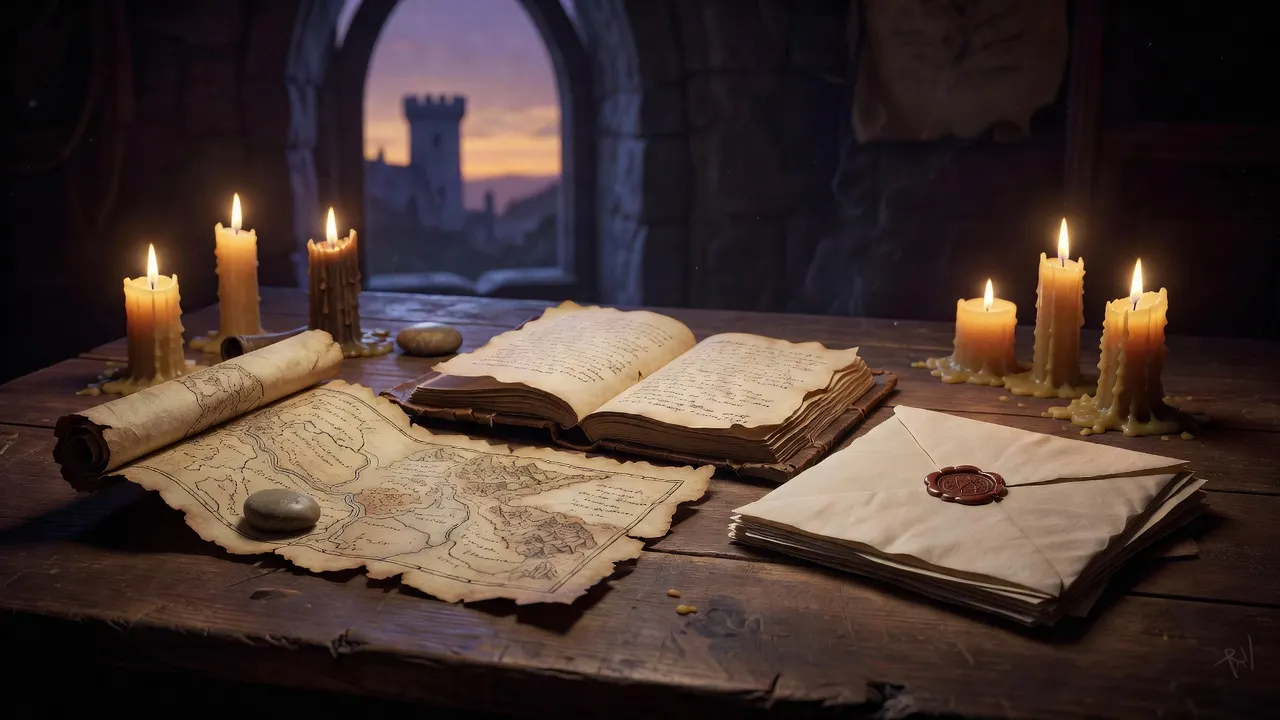
Write each handout for a clear purpose, then let its author’s needs and assumptions shape the words. Use a letter to show a relationship, a journal to reveal a changing view, or a map to guide attention. Give each document one useful clue, keep it easy to read, and make its presentation fit the world.
Key facts
- Fiction using documents can combine letters with diary entries, newspaper clippings and other forms.
- A travel journal documents a journey or a series of journeys.
- Letters sit between public and private worlds, offering a view into people’s thoughts, feelings and lives.
- Document analysis helps readers understand context and extract information to make informed judgements.
- Handouts work best when visual appeal and usability suit the game’s theme.
Give each document one clear job
A handout earns its place when it helps the reader do something: notice a clue, understand a relationship, or choose where to look. Decide that job before writing; if the document tries to deliver every piece of background at once, its main point can disappear. Too much text can leave handouts unread.
Keep the clue distinct from the document’s full meaning. A letter might reveal that its writer fears a particular visitor, while leaving the cause unclear. A journal entry might record an observation that gains meaning beside another source; One map can draw attention towards a marked route without explaining who marked it. Use the form to deliver information in a way that suits the scene.
Documents can vary in form and in how many kinds they combine; Fictional document collections may include letters, diaries and newspaper clippings, among other materials. In a game, that variety can help separate voices or kinds of evidence. Do not add a second format merely for decoration. Choose it when it changes what the reader can learn or how they interpret the clue.
Give players a moment to inspect the handout, then let them decide what it suggests. Document analysis involves finding context and drawing judgements from the material. Avoid explaining every implication in a note from the game master. A useful document gives readers something specific to notice, while leaving room for their own reasoning.
Let the author’s voice shape the evidence
Start with the author’s immediate need. Someone writing to ask for help will choose different details from someone recording a journey for later. A letter can expose private thoughts within a form intended for another person. That tension makes it useful for showing what the writer admits, avoids, or assumes the recipient already knows.
Give the writer a bias: a belief or interest that colours the account. The bias need not make the document false. It can affect which details receive attention, which details seem unimportant, and how the writer describes another person. Keep the clue reliable enough to use, but let the voice leave questions about its meaning.
For a map, choose what its maker wants the reader to see. Some map projections can misrepresent relative sizes on world maps. In a fictional setting, a map’s emphasis can likewise reveal a point of view: its labels, boundaries, or omissions may reflect the maker’s purpose. Keep the clue legible, and make any distortion serve the story rather than confuse basic use.
Make the handout readable and useful
Presentation should support the document’s job. Text-based handouts can deliver key details without breaking immersion. Keep the wording clear enough to read at the table. If a physical object looks convincing but the clue cannot be found, the prop is working against the scene.
Match the format to how readers will handle it. Handouts should be durable and easy to read during play. A paper letter can feel personal; a map can invite several readers to look together. Physical handouts offer a tactile experience, but they can be harder to modify and may suffer wear over time. Choose the form that fits your table’s needs.
Use visual detail selectively. Thicker paper and simple ageing techniques can make a document feel more authentic. A few purposeful marks, folds, or annotations can support the author’s voice. Avoid making texture, ornament, or handwriting compete with the words. The reader should be able to locate the clue without deciphering the whole prop.
Digital handouts can be easier to distribute in online games, while physical ones avoid digital clutter. For either format, test the document from the reader’s point of view: check that labels, handwriting, and important details remain clear. Start with a small set, then adjust the style to suit the group’s response.
What this means for you?
Think of a handout as a small piece of evidence, not a miniature chapter. The reader should be able to identify who made it, why it exists, and what detail matters. Leave enough uncertainty for discussion, but not so much that nobody can tell what to do with it.
If you are a game master preparing a sealed letter, decide what the sender wants from the recipient before writing a single line. Put the clue where a reader can find it, then let the sender’s manner change how it feels. A polite request can still carry pressure; a familiar voice can hide a warning. The document’s purpose and tone should pull in the same direction.
For a journal, write from the author’s present understanding. Do not give the writer knowledge they have not yet gained. A diary records a person’s account, while a travel journal documents a journey. That makes it natural to reveal information through observation rather than explanation. Let the author misunderstand one detail if that creates a useful question, but keep the central clue understandable.
What to do now?
- Choose the document form and state its purpose in a short private note. Decide what the reader should learn or do after reading it.
- Name the author and recipient, even if you keep those details off the page. Use their relationship to guide how direct, formal, guarded, or familiar the wording feels.
- Pick one clue. Write it in a plain sentence first, then build the document around it. Remove details that distract from the clue or make the page carry several unrelated jobs.
- Choose one bias for the author. Let it shape what they notice or leave unexplained, without making the useful information impossible to find.
- Read it aloud, cut repeated explanations, and check that the reader can understand the key detail without help.
- Match the presentation to the use. Check legibility and durability for a physical handout, or clarity and ease of distribution for a digital one.
- Give the finished page to a reader without explaining it. Ask what they noticed and what they think the document is for, then revise unclear wording.
Sources
- en.wikipedia.org/wiki/Epistolary_novel
- en.wikipedia.org/wiki/Diary
- en.wikipedia.org/wiki/Letter_(message)
- www.archives.gov/education/teaching-with-documents
- www.ttrpg-games.com/blog/ultimate-guide-to-ttrpg-props-and-handouts
- forststories.com/props-and-handouts
- en.wikipedia.org/wiki/Map
About this page
Written with AI assistance from the sources listed above, then checked by automated fact, source, repetition and quality checks before publishing.
Facts and links checked on 1 November 2026. Summarises the sources linked above; check the linked source for the latest version.
How we researched this: we compiled this guide from the official and independent sources listed above, and checked the facts on the date shown. Our editorial policy explains how we choose and check sources.