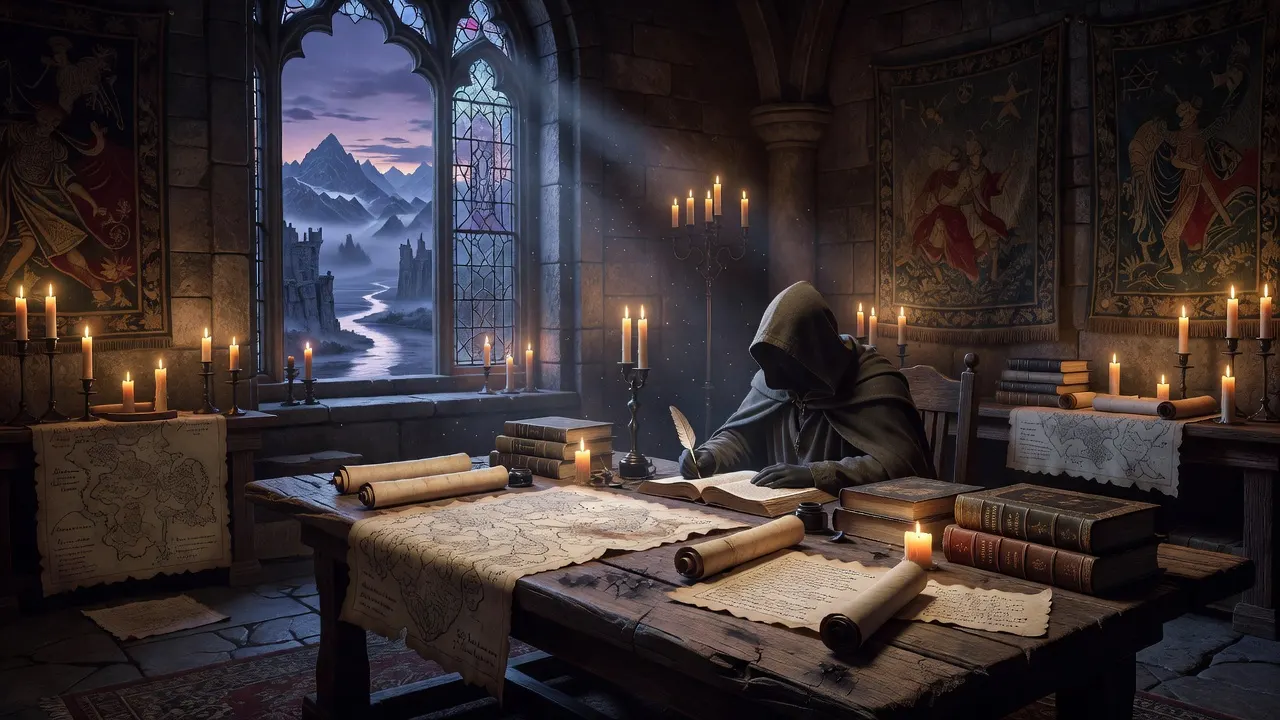
Build a history that explains why your world works as it does, then connect its events to people, places, objects and factions that matter now. Choose key moments, track their order, and show their effects through present-day details. Let readers uncover the past through story, not a block of background.
Key facts
- Convincing history begins with key moments and influential figures that shape the world. Rebecca Shedd’s guide recommends treating history and lore as foundations for an immersive setting.
- A timeline brings history into one chronological view and can help expose contradictions among disconnected documents. StoryLegend’s timeline guide describes eras, histories, factions and lore arranged in a navigable chronology.
- Historical people, events and objects can be brought into gameplay rather than left as notes. Roleplaying Tips recommends creating references to those elements and using them in play.
- Connections between existing pieces of lore can produce adventure hooks. Anima’s connection guide presents this as a way to generate stories from established material.
Choose historical moments that shape the present
Start with the world your audience will meet, not with an exhaustive account of everything that happened before it. List the conditions that define the present: who holds authority, what people fear, what they value, and what they argue about. Then work backwards. Ask what earlier turning point could have created each condition. A strong event changes what people can do, what they believe, or what they inherit.
Give each turning point a cause and a consequence. A rebellion might change who can claim a throne; its aftermath might leave rival groups with competing accounts of legitimacy. Treat these as possibilities for your setting, not as required history. The practical test is whether an event explains something that characters can encounter now. If it changes no belief, institution, place or relationship, it may be background without a job.
You can borrow patterns from different periods and reshape them to suit your story, while keeping the result coherent on its own terms. Use symbolism or recurring themes to give events a shared meaning, rather than adding detail simply to make the past feel larger.
For each major event, write a short note: what changed, who gained or lost, and what trace remains. Keep uncertainty where it serves the story. A disputed account can make history active, while a fixed explanation may suit a setting where the past is widely understood. Choose the level of certainty that best supports the conflicts you want to explore.
Put events in order and connect their consequences
Once you have a small set of turning points, arrange them in a chronology. A timeline is a working tool, not a demand for a complete calendar. It helps you see whether one event can plausibly lead to another and whether different parts of your notes disagree.
Track only the details that help you make decisions: the event, its cause, its result, and any group or place affected. You can use named eras or a calendar of your own design if those choices help organise the setting. Do not spend time filling every gap unless a story needs that gap filled. A blank space can remain a deliberate opening for later invention.
Next, draw links between history and the present. Connect an event to a surviving custom, a faction’s claim, a character’s family story, or a location people avoid. This makes a historical fact useful: it can shape a decision, alter a relationship, or give a place a meaning beyond its description.
When a new detail does not touch anything else, ask what past event or current interest could connect it. If no useful connection appears, revise the detail or leave it out. The aim is not density for its own sake, but a setting where details can lead naturally to play or plot.
Reveal the past through the story
Keep the private record fuller than the version your audience sees. A writer or game master may need causes, consequences and competing accounts to stay consistent. A reader or player usually needs only the part that affects the current scene.
Choose a form of revelation that fits the moment. A character may remember an old promise; a document may contradict a familiar story; an object may carry evidence of a past event. Give each reveal a present-day purpose: change what someone believes, complicate a choice, or raise a question that matters.
Integrate the past into the tools you already use. A historical person can have a living reputation; an old treaty can shape a faction’s demands; a relic can remind characters of a conflict. In fiction, the same principle means attaching lore to the scene rather than pausing the story for a separate lecture.
Control the amount of explanation by watching for reader or player decisions. If the past changes what they choose, it is doing work. If it only adds names and dates, save it for a reference note or cut it. The setting can retain more history than any one story needs; each reveal should earn its space through its effect on the present.
What this means for you?
Historical depth does not require a complete invented chronicle. It requires a clear chain between what happened and what someone can notice or do now. Start with a current conflict, then give it a past that explains its shape. This reverses the common trap of writing generations of events before deciding why the audience should care.
If you are a game master preparing a border town, decide what local dispute your players will encounter. Give the dispute one earlier cause, then connect that cause to a visible place, an influential person and an object or custom. Those links give you several ways to bring the same history into a session without repeating an explanation. One character might know a family account, while another finds a physical trace that challenges it.
What to do now?
- Choose one present-day conflict that your story or game will put in front of its audience. Write down what is at stake and who feels its effects. Use that conflict as the test for every historical detail you add.
- Invent a small set of turning points that explain the conflict. For each one, note its cause, its immediate result and one trace that remains in the present. Keep the events distinct enough that you can explain what each contributes.
- Arrange the events in order. Mark any unclear sequence or contradiction, then decide whether to fix it or make the disagreement part of the setting. Leave gaps that do not affect the story unresolved.
- Connect each event to people, places, factions, customs or objects that the audience can meet. Look for links among existing details before creating more. Remove or revise details that have no useful relationship.
- Reveal the history through a scene, conversation, document or discovery. Give the reveal a consequence for a character’s next choice, then update your notes so the account remains consistent.
Sources
- Rebeccashedd.com/2024/04/12/the-worldbuilders-toolkit-history-lore
- Timeline.storylegend.app/worldbuilding-timeline
- Www.roleplayingtips.com/world-building/7-steps-to-create-your-worlds-lore-integrate-it
- Www.anima-roleplay.com/resources/worldbuilding/lore-history-building/how-to-connect-world-lore
About this page
Written with AI assistance from the sources listed above, then checked by automated fact, source, repetition and quality checks before publishing.
Facts and links checked on 1 November 2026. Summarises the sources linked above; check the linked source for the latest version.
How we researched this: we compiled this guide from the official and independent sources listed above, and checked the facts on the date shown. Our editorial policy explains how we choose and check sources.